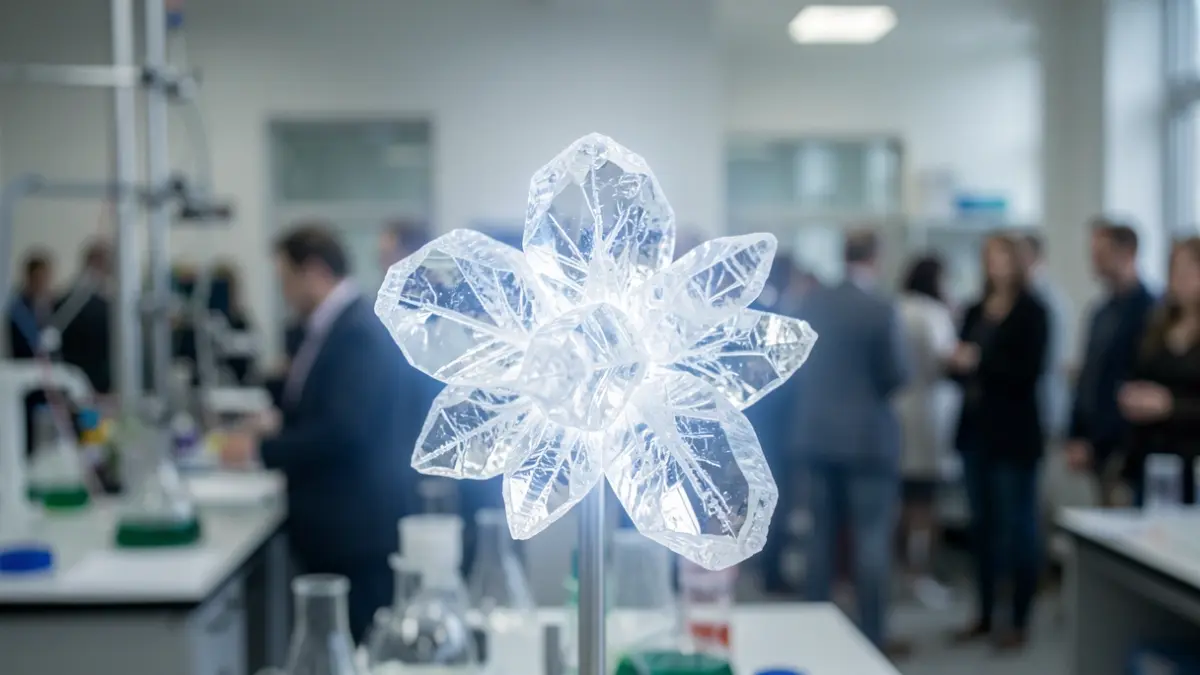
The mission, named ‘Baby BOX-E’, tested the use of microgravity to manufacture highly concentrated protein crystals, which are challenging to produce on Earth. These crystals could enable next-generation cancer treatments to be delivered via at-home injections, a significant advancement from current intravenous hospital treatments.
During its six-week orbit, BioOrbit produced the largest-scale production of protein crystals in a space environment to date. This achievement brings the company closer to making space-based pharmaceutical manufacturing a viable reality. The mission also coincided with a record-breaking £9.8 million seed funding round, the largest ever secured by a start-up focused on in-space pharmaceutical manufacturing.
BioOrbit, supported by the European Space Agency Business Incubation Centre United Kingdom (ESA BIC UK) and the Science and Technology Facilities Council’s (STFC) DeepTech Catalyst programme, aims to harness space science for terrestrial challenges. Since joining ESA BIC UK in 2023, the company has developed specialist systems for microgravity pharmaceutical manufacturing experiments.
The microgravity environment allowed pharmaceutical compounds to crystallise into highly uniform structures, potentially leading to more precise and scalable drug formulations. These could be processed into cancer medicines for simpler, self-administration, reducing hospital visits and improving patient quality of life, particularly for those in remote communities. BioOrbit estimates this approach could cut drug administration costs by up to 90%.
“"This mission marks the beginning of a new era in how medicines can be manufactured. By manufacturing therapies in microgravity, we can unlock formulations that have the potential to make cancer treatment more accessible, more effective and far easier for patients to receive."
Katie King, Founder and CEO of BioOrbit, added that the company's vision is to move cancer treatment from the hospital ward to the home, with a long-term goal of establishing a pharmaceutical manufacturing facility in space within the next decade.
The ESA BIC UK, part of the STFC DeepTech Catalyst, supports early-stage companies using space technologies. An independent evaluation revealed that since 2011, it has supported 179 start-ups, created over 1,060 jobs, generated £11 in economic benefit for every £1 spent, and helped alumni businesses raise £340 million in private investment.
“"BioOrbit represents exactly the kind of bold, potentially world-changing innovation the ESA BIC UK was created to support."
Paul Vernon, Executive Director for Business and Innovation at STFC, highlighted BioOrbit's application of the unique space environment to healthcare challenges, potentially enabling less invasive cancer treatments from home.