Major Investment Fuels UK Renewables with Two New Offshore Wind Projects
A £12 billion investment, hailed as the largest of its kind, will power millions of homes and create thousands of jobs.
By The SME Chronicle Newsroom
••3 min read
AI
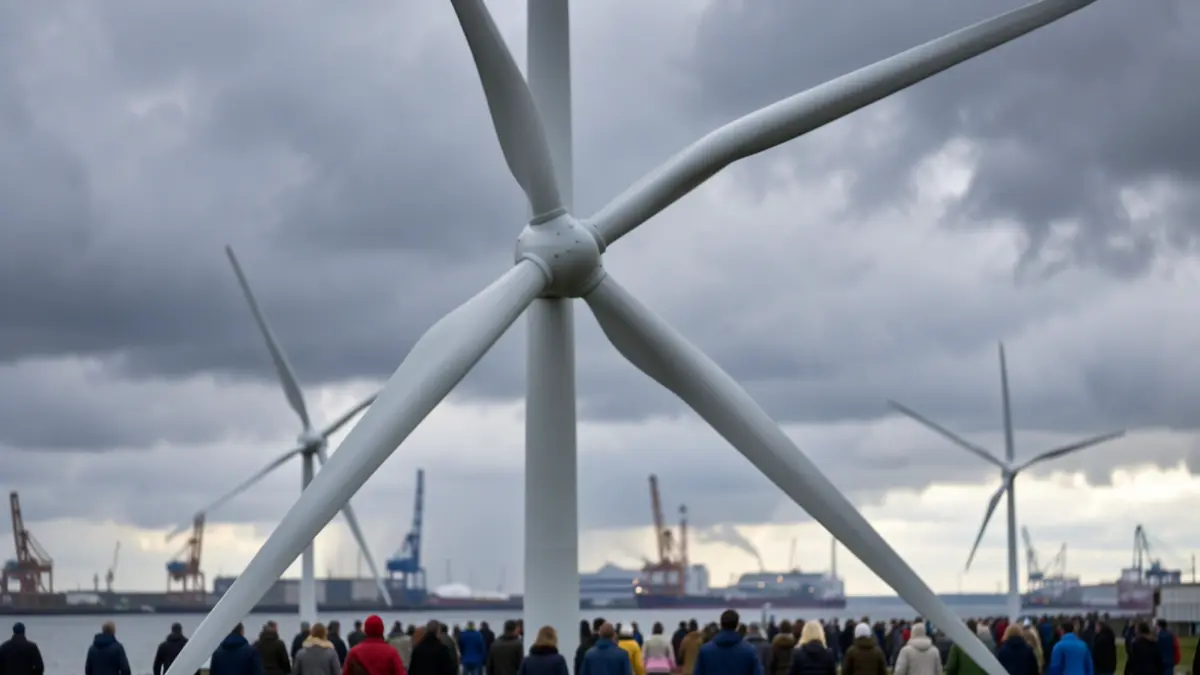
Generic image of offshore wind turbine blades against a dramatic, overcast sky, with blurred industrial structures in the background.
The UK is set to significantly boost its renewable energy capacity with a major £12 billion investment in two new offshore wind projects, Vanguard West and Vanguard East, expected to be operational by 2030.
This substantial investment, believed to be the largest of its kind in UK history, is being hailed by the Prime Minister as a significant step towards achieving clean, homegrown energy for millions of households and businesses. The projects, developed by energy company RWE in partnership with global investment firm KKR, aim to provide secure power and shield consumers from global fossil fuel price volatility.
The announcement comes as the Prime Minister prepares to attend the COP31 Leaders’ Summit in Türkiye, highlighting the UK's commitment to climate action and clean energy. The investment is projected to support over 2,400 jobs during construction and operation, with the wind farms collectively capable of powering approximately three million UK homes. This initiative is expected to enhance domestic energy security and contribute to lowering energy bills.
Further bolstering the UK's green energy sector, SSE has announced that the latest phase of its Berwick Bank B offshore wind farm will create 2,677 skilled jobs across the north of England and Scotland. This phase includes 130 new roles in Glasgow and Montrose, with Siemens Energy contracted for turbine and substation manufacturing. Berwick Bank, located off the East coast of Scotland, could become the world's largest offshore wind farm, meeting over 6% of current UK electricity demand.
The National Wealth Fund, the UK’s publicly-owned policy bank, is contributing £1 billion to these projects, marking its largest investment in offshore wind to date. This public-private partnership aims to unlock further private investment and generate returns for taxpayers. The government is also launching a new Energy Wealth Fund, initially injecting £2 billion, linked to future North Sea revenues to invest in renewable and low-carbon energy projects.
“
"This major investment in UK renewables is a vote of confidence for building in Britain. And it is great news for billpayers because every turbine we put up is power under British control, not at the mercy of events on the other side of the world."
“
"This is another vote of confidence in British homegrown, clean energy. Investment in offshore wind and clean power is creating quality jobs and rebuilding industry, while delivering the clean power we need to lower bills and reach net zero."
“
"Together with KKR, we are delivering two of the UK’s largest offshore wind projects, strengthening domestic electricity generation and making an important contribution to the country’s long-term energy security."
“
"Our work with RWE demonstrates how private capital can help turn the UK’s energy ambitions into reality, supporting economic growth and delivering critical infrastructure capable of powering around three million UK homes."
“
"This is public-private partnership in action. Clear political direction, matched by businesses prepared to invest, is translating into real-world investment in British jobs, skills and manufacturing. From Hull, Newcastle and Manchester to Glasgow and Montrose, you can see what that means for communities across the country."
The government's strategy includes the recent introduction of the Energy Independence Bill, aimed at ensuring affordability and removing barriers to clean energy delivery. Measures will enhance public oversight of operators, strengthen household and business protections, and give local communities a greater stake in renewable energy projects.