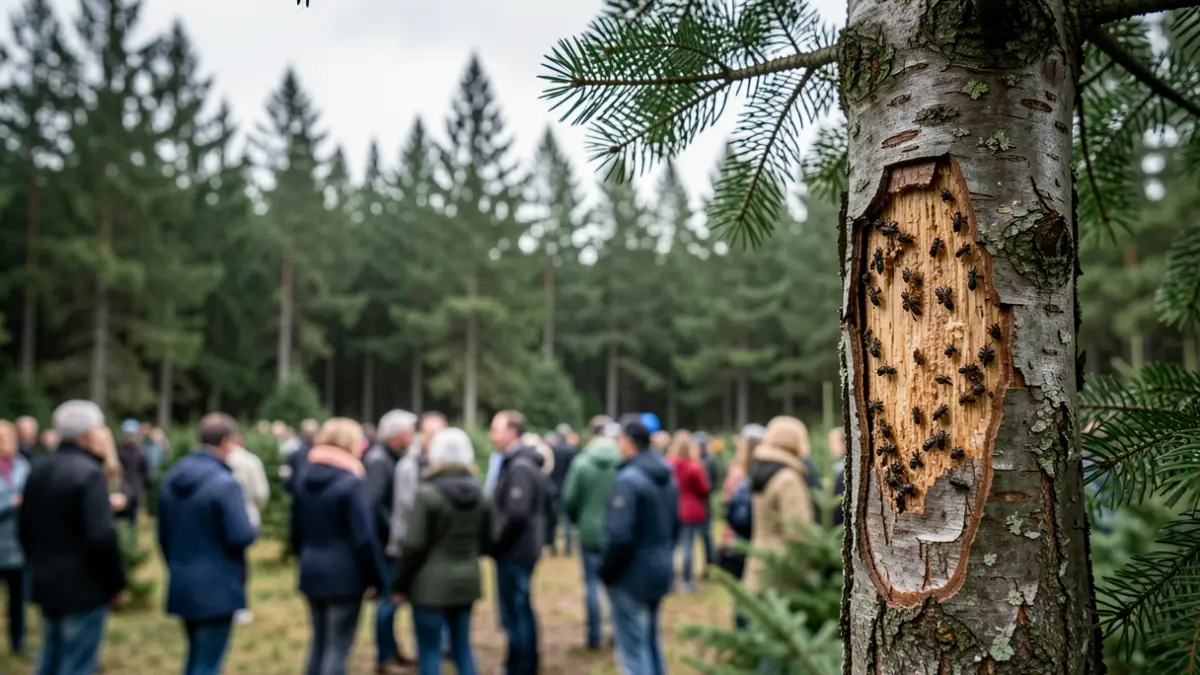
Launched in October 2025, the SSA grant assists woodland owners in assessing their spruce trees and implementing proactive measures against the threat posed by Ips typographus, also known as the eight-toothed spruce bark beetle. This initiative is part of the government's broader strategy for tree health, aiming to mitigate the devastating effects this pest could have on the UK's forestry sector if it becomes widely established.
The £2,000 grant empowers landowners to better understand the condition and extent of their spruce woodlands, identifying opportunities for proactive management. This allows for early steps to reduce infestation risks and safeguard woodland health. The SSA complements existing management plans by incorporating condition scoring and location mapping, providing a robust evidence base for decision-making. It also identifies operational needs, such as access and harvesting considerations, enabling better planning and reducing uncertainty for future felling operations.
By collecting detailed data on timber volumes and stocking density, the SSA helps landowners gauge the potential timber value and associated felling costs, thereby minimising unexpected expenses or delays. Furthermore, the assessment can highlight wider woodland improvements, such as enhancements to permanent infrastructure and access, which facilitate proactive spruce removal and support long-term woodland management.
The SSA has successfully completed its first year, with woodland owners across various sites receiving support. The surveys have gathered crucial information and statistics to inform future tree health initiatives. The scheme has accommodated a diverse range of woodland types and ownerships, from small plots of 0.5 hectares to large woodlands exceeding 400 hectares. In total, 41 agreements were approved, leading to the survey of over 2,450 hectares, with high-risk spruce material identified in every instance, underscoring the importance of early assessment and proactive management.
Collectively, these surveys have identified an estimated 26,000 tonnes of spruce for potential removal, with landowners planning to fell 60% of this within 12 months. This effort significantly reduces the amount of high-risk spruce available to the beetle, enhancing resilience against infestations. The SSA remains open for applications, with limited spaces available.
Landowners completing an SSA may also be eligible for enhanced felling funding rates through the Tree Health Pilot (THP), depending on their location. This year, 17 sites that finished an SSA have secured THP funding for proactive felling. The THP grant supports woodlands within the demarcated Ips typographus area, comprising a proactive spruce removal zone and a priority spruce removal area within it. Applicants in the priority zone can receive funding for 80% of felling costs, regardless of SSA completion. Those in the wider proactive zone outside the priority area can also access 80% funding if an SSA identified susceptible spruce and a Woodland Officer confirmed it. Applicants in the wider proactive zone without an SSA may be eligible for 40% of felling costs.