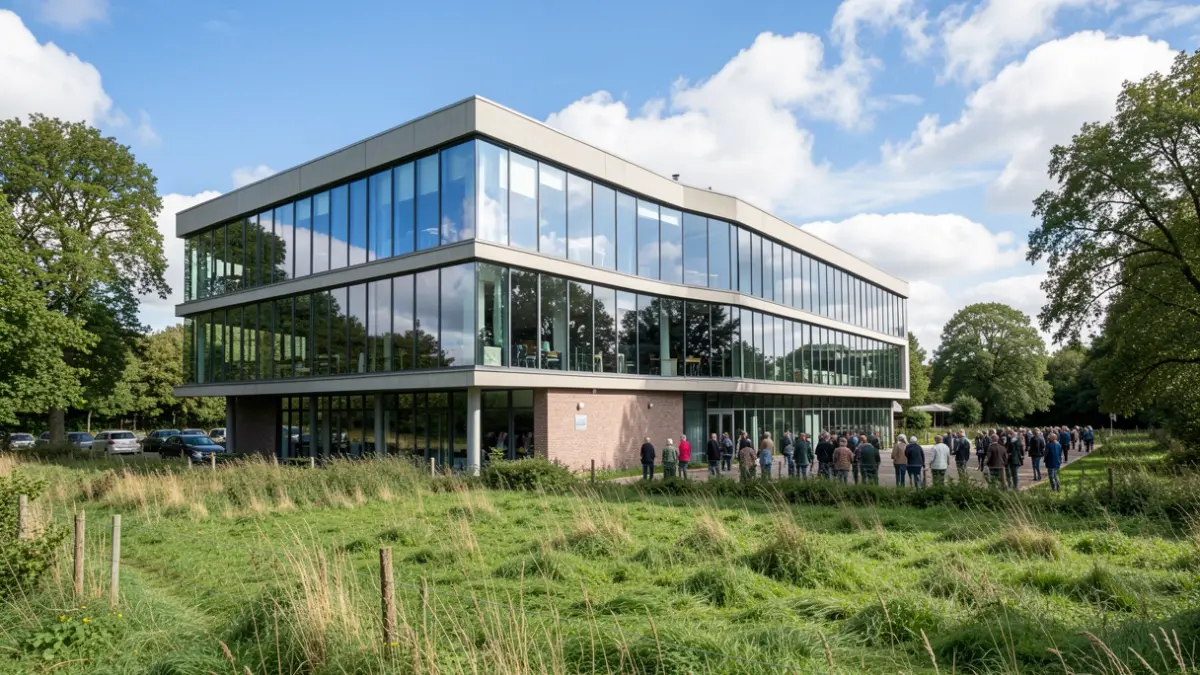

The selected companies will benefit from tailored support packages, including access to artificial intelligence (AI) and prototyping facilities, expert business guidance, and intellectual property support. This initiative, based within the Sci-Tech Daresbury campus in the Liverpool City Region, aims to help early-stage businesses bring new ideas to market faster, ultimately improving lives and enhancing global market success.
The DTC Health programme, launched in 2024 with £1.8 million from the Liverpool City Region Combined Authority Innovation Zone Programme, is part of the growing North West Health Cluster. It provides start-ups with resources to develop technologies that benefit patients, create jobs, and strengthen the UK’s health innovation ecosystem.
Among the latest innovators are UKind XR, offering trauma-informed VR and AI support for therapy waiting times; Eyetech Innovations, developing a portable device for assessing eye conditions; and HMA Technologies, creating a wearable robotic arm to aid stroke survivors' rehabilitation at home.
Further participants include Beyond Blood, with portable blood-testing technology; Asika, developing AI agents to automate hospital administrative workflows; CCI Photonics, creating an AI-enhanced diagnostic platform for rapid infection detection; and InformiX Pharma, using 3D X-ray imaging to improve medicine development.
Paul Vernon, Executive Director of Business and Innovation at STFC and Head of Daresbury Laboratory, highlighted the programme's role in transforming ambitious ideas into technologies that could revolutionise healthcare. He emphasised STFC's commitment to supporting early-stage businesses and strengthening the UK's position in deep tech innovation, aligning with the Government’s Modern Industrial Strategy.
The DTC Health programme is part of STFC’s DeepTech Catalyst network. Recently recognised by the Financial Times as a leading SME Hub, it has supported over 230 start-ups since 2011, collectively raising more than £720 million in private investment, creating over 1,100 jobs, and achieving a 95% survival rate over five years.