
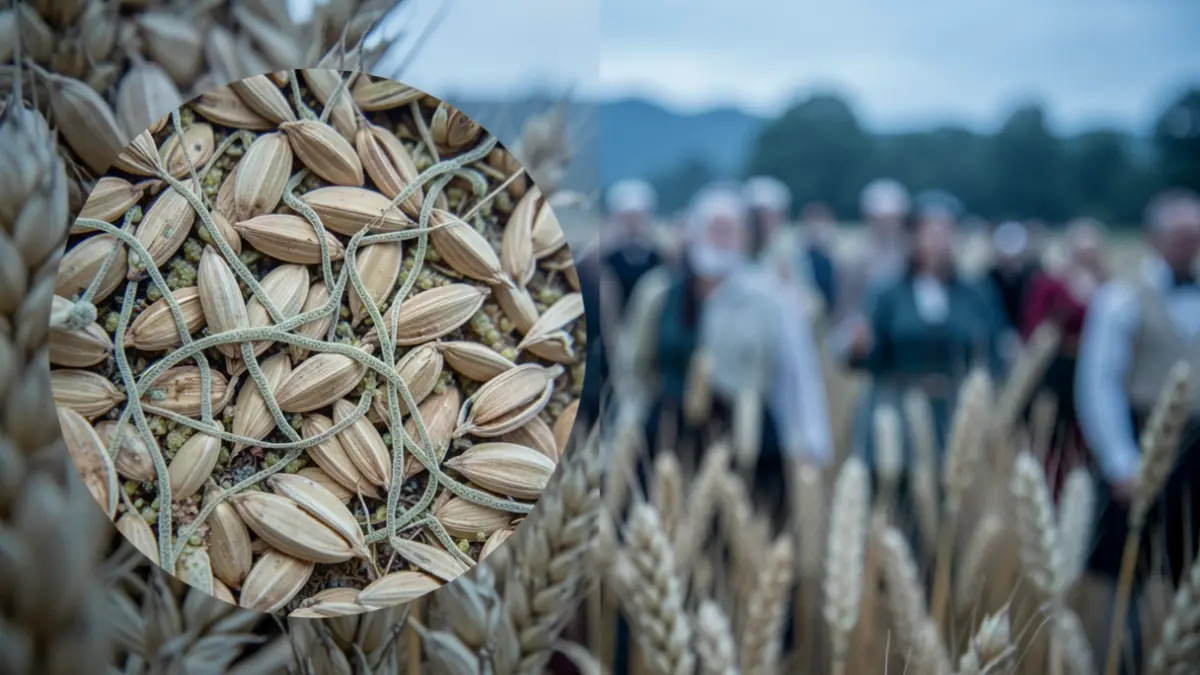
Researchers have identified a beneficial fungus, Chaetomium globosum, residing within wheat seeds that could offer crucial protection against Septoria tritici blotch (STB), a significant disease impacting global food security. This discovery marks the first instance of the fungus being found in wheat, though it has previously been identified in other plants like tomatoes and apples.
The research, a collaboration between the University of Tehran and Heriot-Watt University, led by Dr Amir Mirzadi Gohari and Dr Angela Feechan, has demonstrated the fungus's ability to substantially suppress STB. This disease, caused by the fungus Zymoseptoria tritici, can reduce wheat yields by up to half during severe outbreaks, particularly affecting major producers in Northern Europe like the UK, Germany, France, and Denmark due to favourable climatic conditions.
Dr Amir Mirzadi Gohari highlighted the urgency of finding alternatives to chemical fungicides, which are facing increasing resistance and raising environmental concerns. "Finding a naturally occurring fungus that fights this pathogen could be a huge step forward; it’s a very exciting discovery," he stated.
In laboratory tests, wheat varieties treated with the fungus experienced a significant reduction in disease severity. Lesions covered up to 74% less leaf area, and spore-producing structures were reduced by 82%, with overall disease severity falling by more than half across susceptible varieties.
Dr Angela Feechan explained that Chaetomium globosum appears to combat STB through multiple mechanisms. It primes the plant's natural defences, similar to a vaccine, and secretes antifungal compounds that directly attack the pathogen. Extracts from the fungus inhibited spore germination by over 80%.
Furthermore, the fungus may promote plant growth by producing ammonia and the plant hormone auxin, aiding nutrient uptake. Further investigation is planned to identify the specific antifungal compounds and responsible genes through genome sequencing.
Future research, including field trials, will determine the practical application of Chaetomium globosum for farmers. Potential methods include coating seeds before planting or developing a spray-on treatment, mirroring the fungus's natural interaction with wheat in the soil.