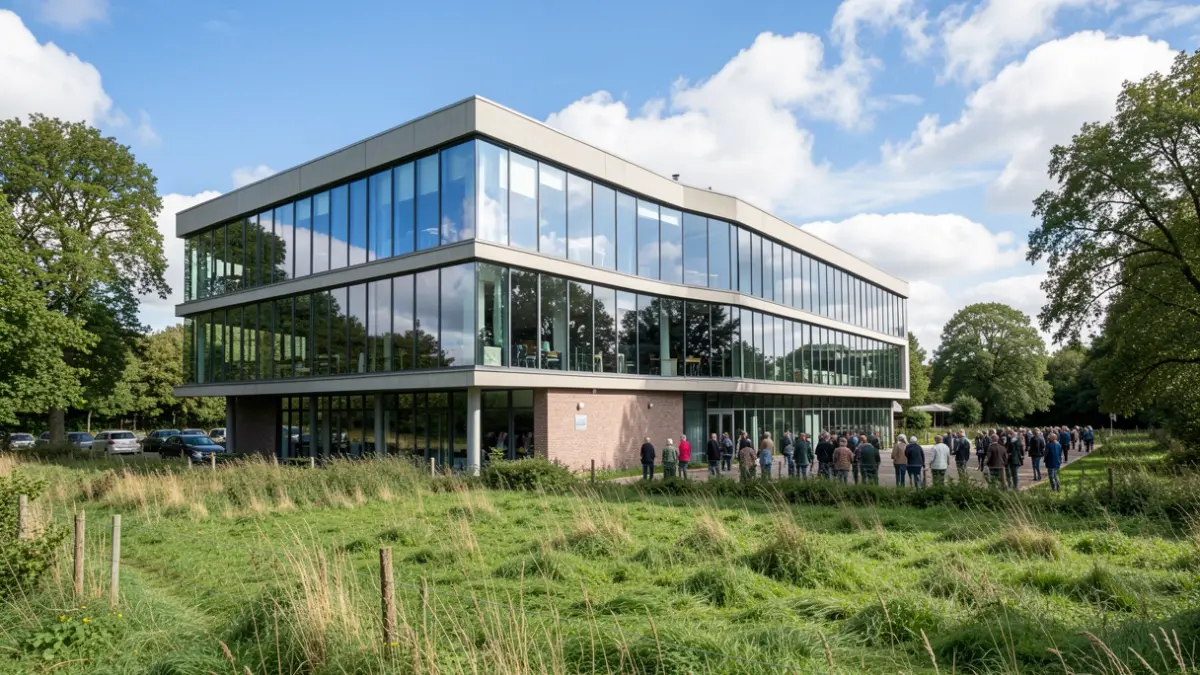

The project, known as TH₂ISTLE, will bring together an international consortium of 28 partners, including universities, industry leaders, and economic development agencies, for a kick-off meeting at the University of Aberdeen on Tuesday. This initiative is set to play a crucial role in decarbonising sectors where electrification is challenging, such as heavy transport, ports, manufacturing, agriculture, and the food and drink industry.
Funding from the Clean Hydrogen Partnership will support the integration of existing and planned green hydrogen production sites across the North-East. These sites will be connected by a dedicated tube-trailer distribution network and strategically placed refuelling points. The project will explore the role of green hydrogen within the region's broader energy system and identify opportunities for the energy transition.
Demonstration projects will showcase the commercial and technical applications of hydrogen, supported by a local and European supply chain. Beyond infrastructure deployment, TH₂ISTLE will focus on skills development, public engagement, and knowledge sharing. Digital tools, including a regional hydrogen digital twin, will be developed to inform future hydrogen valley developments across Europe.
Scottish Enterprise is a key project partner, leading efforts to maximise economic impact, learning, and replication throughout Scotland. Suzanne Sosna, Director of Energy Transition at Scottish Enterprise, highlighted the project's aim to create a fully connected network of hydrogen projects, fostering new commercial opportunities with proven demand across multiple sectors and strengthening collaboration in the green hydrogen market.
Professor Nick Forsyth, Provost of the University of Aberdeen, expressed delight at hosting the launch, emphasising the project's potential to contribute to the energy transition and sustainable economic growth in north-east Scotland. He noted Aberdeen's established track record in hydrogen innovation, with TH₂ISTLE building on this foundation.
Dr Alfonso Martinez-Felipe, Project Lead at the University of Aberdeen, stated that hydrogen is vital for decarbonising challenging sectors. He added that realising its potential requires understanding where it can deliver the greatest benefits and how it can be integrated into, and transform, existing industries. Researchers at the University of Aberdeen will contribute digital modelling, simulation expertise, and socio-economic analysis to support the region's adaptation to the evolving energy landscape.
The project is funded by the European Commission under HORIZON-JU-CLEANH2-2025, Grant number: 101251080.