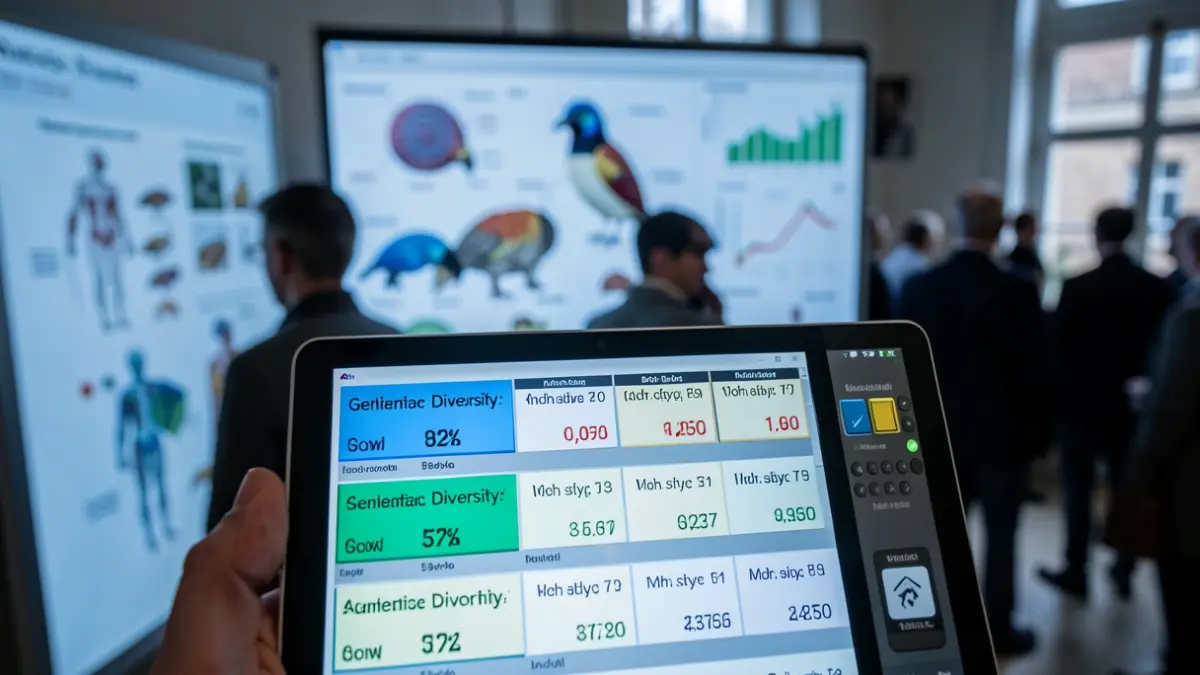
Scientists from the Royal Botanic Garden Edinburgh, the University of Edinburgh, and NatureScot have successfully broadened a low-cost tool for monitoring the genetic diversity of wild species. This innovative scorecard, first published in 2020, now encompasses marine species such as fish, dolphins, porpoises, sharks, skate, and birds for the first time, alongside a wider range of terrestrial animals, plants, and fungi.
The tool assesses how effectively species threats are being managed and the conservation actions in place, ranging from the efforts of land managers to conservation initiatives within botanic gardens and zoos. Its expansion aims to give species a better chance of adapting to changing weather patterns, new diseases, and food shortages, highlighting the vital role of genetic diversity for nature's survival and its contribution to essential resources like food, building materials, and pollution absorption.
The Scottish approach is already gaining international traction, being used for species management in South Africa and in a collaborative project with the University of Benghazi in Libya. A site-based version has also been developed, working with farmers and land managers in Scotland, Libya, Mexico, and Australia.
Speaking ahead of her attendance at COP17 on Biodiversity in Armenia, the Cabinet Secretary for Climate Action and Rural Affairs, Gillian Martin, praised the scientists involved. "The fact that this Scottish resource is now being used internationally, and can support marine species for the first time, demonstrates the global value of expertise developed here in Scotland as well as underlining just how impressive Scotland’s scientific community is," she stated. "Biodiversity is in crisis, both globally and at home, so maintaining genetic diversity is essential if species are to adapt and survive. This innovative tool helps conservationists make better decisions in order to better protect nature."
“"The scorecard has been a brilliant addition to the wildlife management guidelines used across Africa. It takes complicated genetic science and turns it into something practical that conservationists can actually use day to day."
“"The Scottish scorecard has effectively helped in demonstrating genetic biodiversity in Libya. The structure and contents of the scorecard have organised scattered local biodiversity literature and guided national research to build a useful, effective national database."
The Conference of the Parties to the UN Convention on Biological Diversity (COP17) is taking place in Armenia from 19 to 30 October 2026. Genetic diversity refers to the variation in genetic material within and between populations of a species, providing the basis for adaptation and evolution.