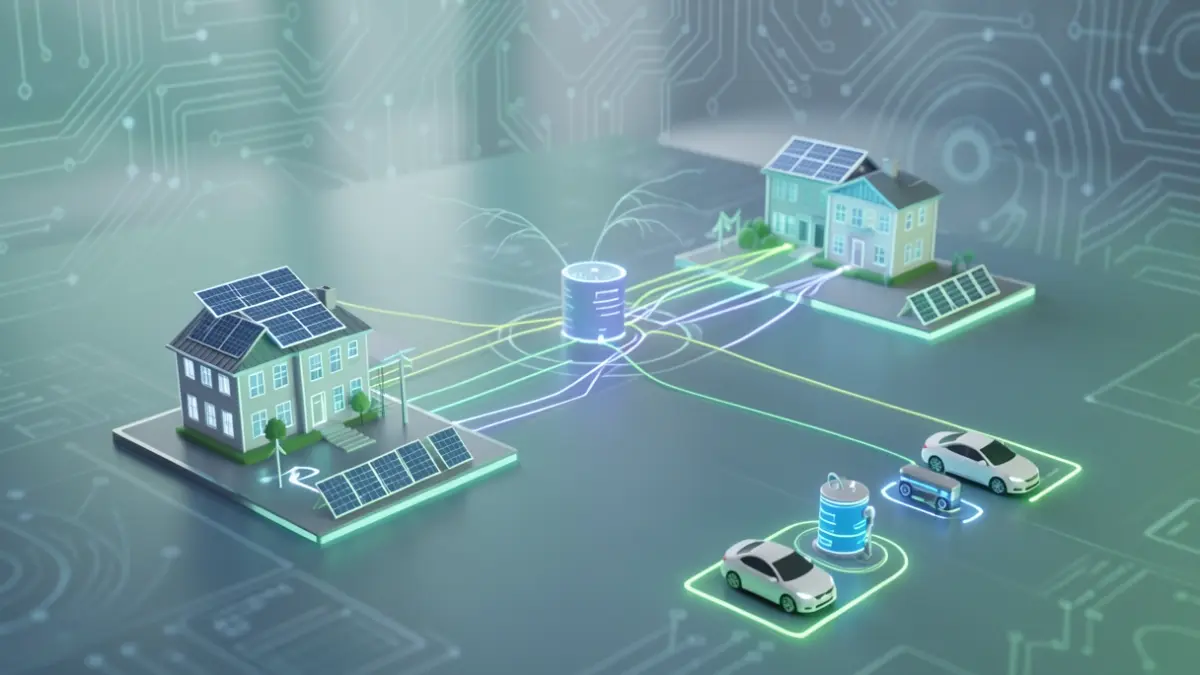
Led by Dr Syed Attique Shah, Senior Lecturer in Smart Computer Systems at BCU’s Department of Computer Science, the project investigates how energy-efficient buildings, renewable generation, battery storage, and electric-vehicle charging can be integrated more effectively. A digital twin, a virtual representation of a physical system, uses data to mirror its behaviour. This project combines digital twin technology with AI to forecast energy demand and renewable generation, identify potential faults, and test operational strategies in a virtual environment before real-world implementation.
Dr Shah explained, “Energy systems are becoming increasingly interconnected, with buildings, renewable generation, batteries and electric vehicles all influencing how electricity is produced and consumed. Our aim is to help operators understand those interactions, anticipate changing conditions and test their options before making decisions.”
“"By combining AI with a digital twin, we can explore questions such as when to store renewable electricity, how to manage electric-vehicle charging and how to respond when demand rises or generation falls."
The technology could assist operators in anticipating evening demand peaks and assessing whether storing surplus solar electricity earlier in the day would reduce costs and grid pressure, leading to practical benefits for energy expenses and increased resilience of local energy systems. The project aims to deliver a functional digital twin demonstrator by integrating historical energy data, real-time information, and simulated scenarios. The team will develop and evaluate forecasting and optimisation methods, examining prediction accuracy alongside potential improvements in renewable energy use, peak demand, operating costs, and emissions.
Dr Shah is the Principal Investigator, supported by BCU Co-Principal Investigators Dr Muhammad Ajmal Azad and Michael Grace, along with research assistants Dr. Ali Hamza, Dr. Ahmad Wahab, and PhD researcher Fatima Iqbal. The team possesses expertise in artificial intelligence, digital twins, cybersecurity, energy systems, and sustainable urban development. The developed methods are intended for future applications in university campuses, business premises, and urban regeneration projects, forming a basis for larger real-world pilots and industry collaborations. The research is funded by the Engineering and Physical Sciences Research Council (EPSRC), part of UK Research and Innovation (UKRI), through the Digital Twinning NetworkPlus (DTNet+).