
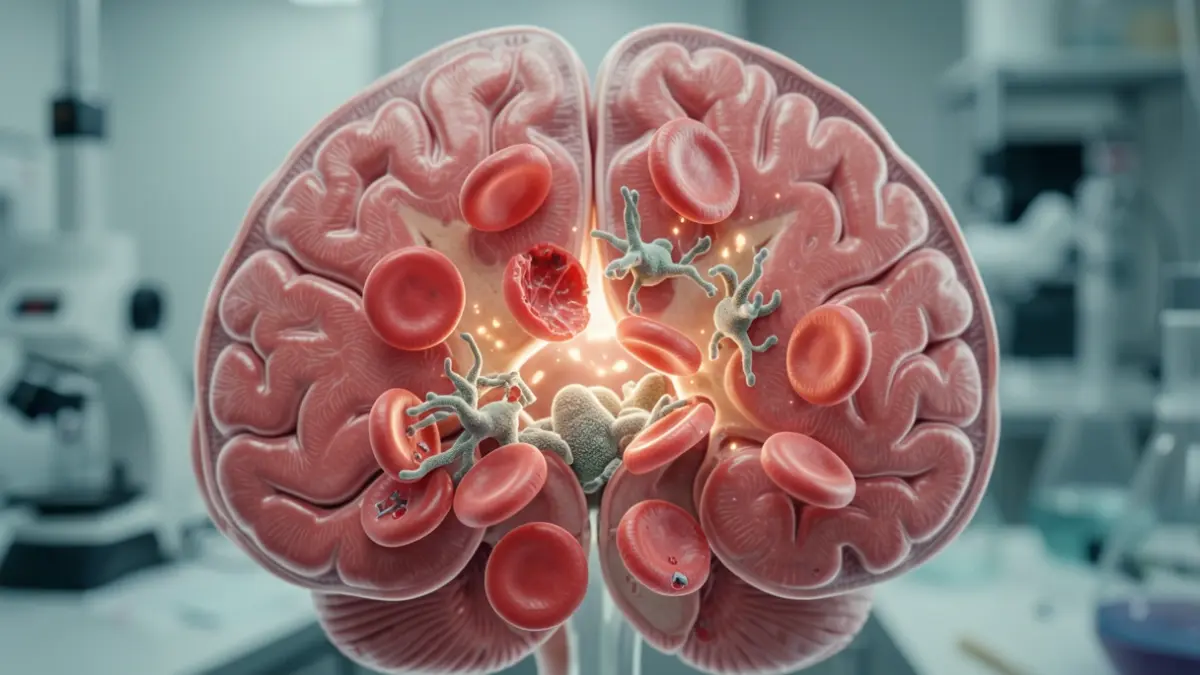
Intracerebral haemorrhage (ICH) occurs when a blood vessel bursts within the brain, releasing substances like iron that cause significant damage. Effective treatments for ICH remain limited.
Publishing in the Journal of Neuroinflammation, the research team has identified a biological process in humans and mice that appears to help the brain recover from bleeding and improve outcomes. The study, funded by the Medical Research Council, focused on an enzyme called cholesterol 25-hydroxylase (CH25H), which converts cholesterol into 25-hydroxycholesterol (25HC).
Researchers observed increased levels of CH25H in brain tissue from ICH patients, particularly in immune cells surrounding the bleeding site. This enzyme appears to assist the brain's immune cells, known as microglia, in engulfing and removing red blood cells that have leaked into brain tissue following a haemorrhage. It also influences genes involved in clearing cellular debris and processing fats and cholesterol within these microglia.
“"Our research suggests that the enzyme CH25H and the molecule it produces, 25HC, help the brain’s immune cells clear away damaged red blood cells after a haemorrhagic stroke, limiting the harmful effects of bleeding and highlighting a promising natural process that could potentially be harnessed to improve recovery for patients."
The breakdown of red blood cells can exacerbate brain damage after the initial stroke, making this clean-up process critical. Experiments showed that mice genetically lacking CH25H experienced greater iron accumulation, more tissue damage, and worse neurological symptoms after an induced brain haemorrhage. Conversely, treating mice with 25HC improved their functional recovery and reduced signs of damage.
“"These findings reveal an important part of the brain’s natural clean-up response after haemorrhagic stroke, showing how 25HC can help immune cells remove damaging material more effectively, and while further research is needed, targeting this pathway could ultimately offer a new approach to treating this devastating and often deadly condition."
Further research is needed to determine if targeting this pathway can be developed into a safe and effective treatment for patients.