
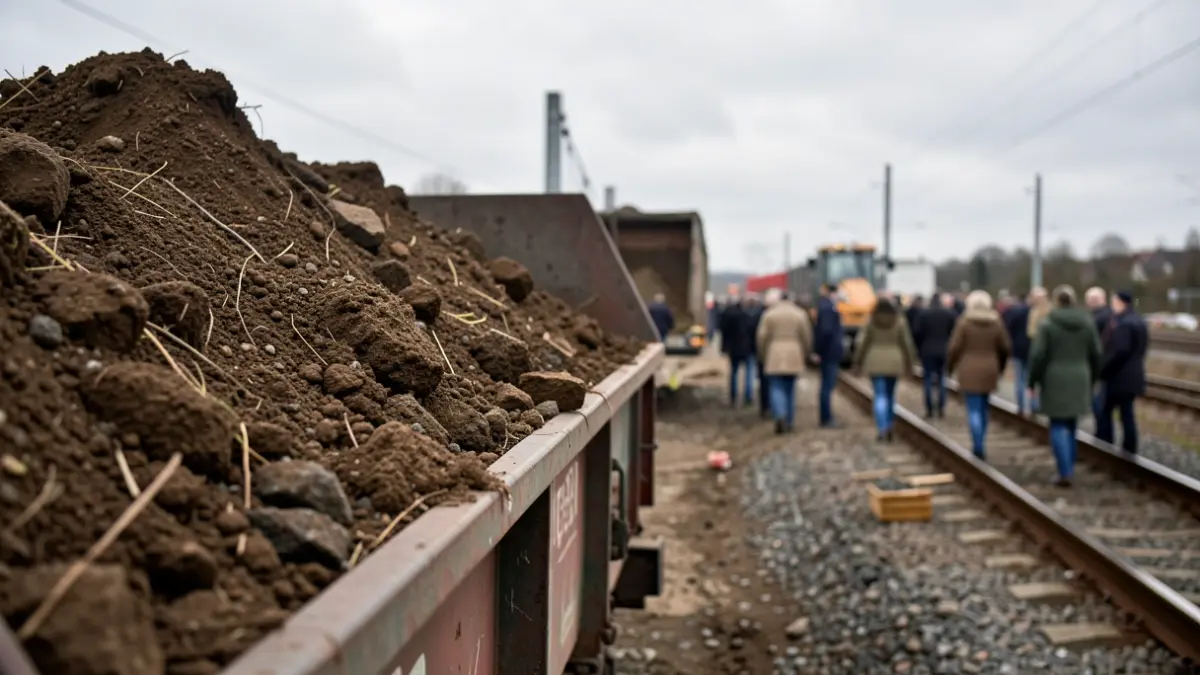
Rail Minister Lord Hendy visited the HS2 Euston site on Monday, 16 November, to observe the use of rail freight for removing excavated material as preparations for the new station advance. The construction partner, Mace Dragados joint venture (MDJV), has commenced bulk excavation to a depth of around seven metres for the new platforms.
Up to 170,000 tonnes of excavated material will be transported by rail from a new loading facility beside the disused Track 17 at Euston station. The material is destined for the Stewartby Brickworks development in Bedfordshire. This programme, developed in collaboration with Network Rail and the wider rail industry, is designed to allow freight trains to operate alongside passenger services.
The initiative aims to remove over 10,000 HGVs from roads around Euston and across London. Rail Minister Lord Hendy highlighted the benefits, stating, "Moving this soil by rail will mean thousands fewer HGV journeys through the streets around Euston, helping to reduce disruption for local people, improve road safety and cut carbon emissions." He also noted HS2's overall progress, with all tunnel sections between Old Oak Common and Birmingham dug and over 80% of major structures under construction or complete.
Successful trials between February and September 2026 demonstrated that trains could carry more material than anticipated and operate reliably alongside passenger services. The next phase will see a further 135,000 tonnes removed over the coming ten months. Up to two trains daily, operated by GB Railfreight, will carry approximately 715 tonnes of material each, equivalent to about 45 HGVs.
Andy Swift, Stations Delivery Director, HS2, emphasised the commitment to reducing local impact: "Moving material by rail is one of the most effective ways we can reduce the number of construction vehicles using local roads." He acknowledged the careful planning with Network Rail, GB Railfreight, and construction partners.
Cllr James Slater, Leader of Camden Council, welcomed the development, stating, "Taking more than 10,000 lorries off Camden's roads is a significant achievement that will reduce disruption for our residents and businesses, improve air quality and help cut carbon emissions." He urged further exploration of rail transport options.
Rail freight produces up to 76 per cent fewer CO₂ emissions than road freight, contributing to HS2's commitment to reducing its carbon impact. This approach at Euston aligns with HS2's broader strategy of utilising the existing railway during construction, which has previously involved bringing aggregate into sites and carrying excavated material away from other construction areas.
Patrick Cawley, Director for On Network Works at Network Rail and HS2, commented on the collaborative effort required to safely accommodate freight trains alongside daily operations at one of Britain's busiest stations. Each train will consist of two locomotives and up to 12 wagons to maximise capacity.
Track 17 is expected to be available until early 2029, with ongoing exploration of its use for wider construction projects across the Euston campus.