
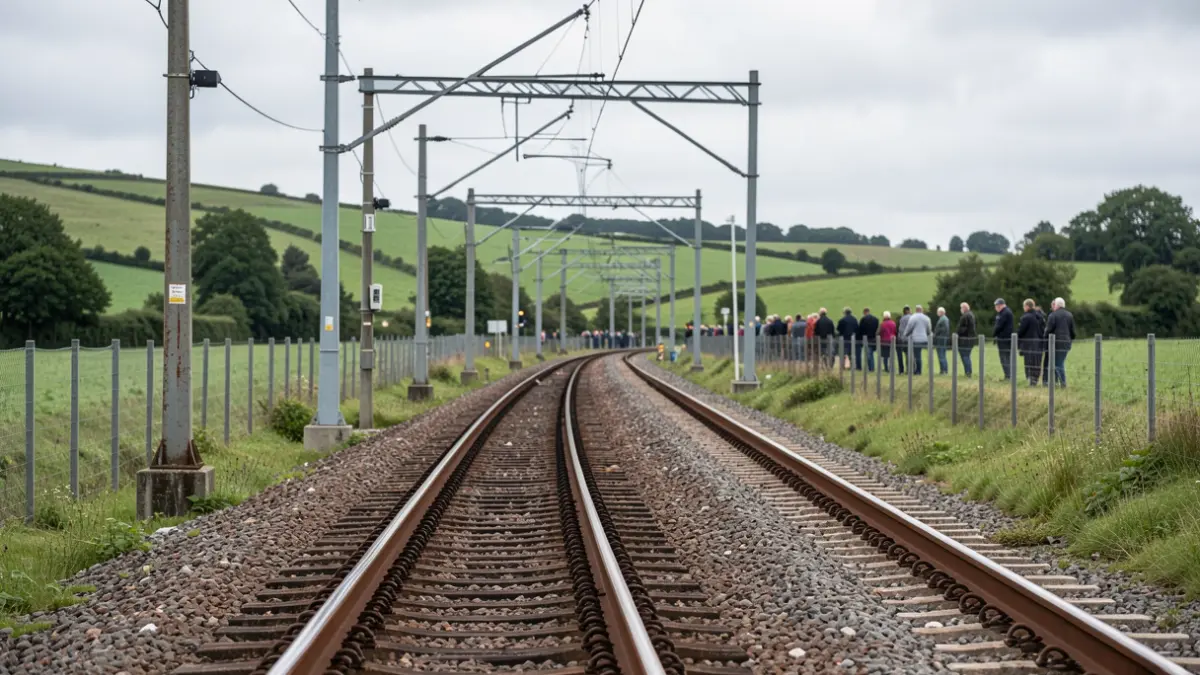
This significant milestone underscores TRU's commitment to creating a lasting economic, environmental, and social legacy in the communities along its route, in addition to delivering a faster, more reliable, and greener railway.
Anna Humphries, TRU Head of Sustainability and Social Value, stated: “TRU is a major investment in the North, so it’s important that the benefits of that investment are felt by the businesses and communities along our route, for years to come. Surpassing £1 billion spent locally is a significant milestone and demonstrates the progress we are making against our social value commitments and in driving economic growth across the North. The specialist skills and expertise of the companies and teams we work with are helping us deliver a better railway, while our investment is helping businesses across the North grow and build capability.”
COWAP, a business with teams in Manchester and Yorkshire, exemplifies this approach. The company has contributed to TRU by fabricating and installing overhead line equipment, boundary fencing, and other infrastructure at key locations, including the recent work on the Huddersfield viaduct. Between 2020 and 2025, COWAP's TRU-related revenues saw a 50% increase, enabling investment in new facilities, including a site in West Yorkshire, alongside specialist machinery and vehicles.
Kevin Cowap, Commercial & Operations Director at COWAP, commented: “Working with TRU is a real boost for our business, giving us the opportunity to grow alongside one of the country’s biggest infrastructure programmes. Our work has supported investment in our people, facilities and equipment, including our new site in Dewsbury. We’re proud of the work we’ve delivered across the programme and to see the contribution a local business like ours can make to transforming train travel across the north.”
TRU's 'Northern Jobs' approach mandates that at least 25% of its project supply-chain spending is directed to businesses within 25 miles of the route. Furthermore, TRU requires at least 33% of partners' project supply-chain spending to go to small and medium-sized enterprises.
Mark Casci, Head of Policy and Representation for West & North Yorkshire Chamber of Commerce, added: “Major infrastructure investment has the greatest impact when the benefits are felt across the wider economy, and TRU’s £1 billion milestone is a great example of that. Keeping more of that investment within the North creates opportunities for local businesses, supports jobs and skills, and helps firms invest and grow. That strengthens the regional economy while building capability that can continue to benefit Yorkshire businesses long after the programme is complete.”
TRU's engagement with local companies provides mutual benefits, offering access to specialist expertise and knowledge of local conditions, while its investment aids business growth, job creation, and skill development within the region. The programme also aims to support up to 8,000 roles and create 590 apprenticeships over its lifetime, drawing the majority of its workforce from communities near the route.
The Transpennine Route Upgrade (TRU) is a multi-billion-pound railway programme set to transform journeys across the North, enhancing connectivity between cities such as Manchester, Huddersfield, Leeds, and York. Key achievements include 25% electrification, with electric services running between Manchester and Stalybridge, and York and Church Fenton. Upon completion, TRU aims to halve delay times, with 70 worksites currently active along the 70-mile route. Future improvements include full line electrification, doubling track capacity in key areas, implementing digital signalling, and upgrading all 23 stations. TRU employs over 5,000 staff, with 85% from within 40 miles of the route, and has created over 8000 jobs. The programme also expands freight provision, adding 15 freight paths and widening tunnels to enable container transport between east and west coast ports, potentially removing over 1000 lorries daily.
Key milestones to date include the construction of new stations at Mirfield and Morley, the introduction of a fully accessible platform at Castleford station, a £100m upgrade of diversionary routes to enhance resilience, and completion of the Hope Valley line upgrade with additional track at Bamford.