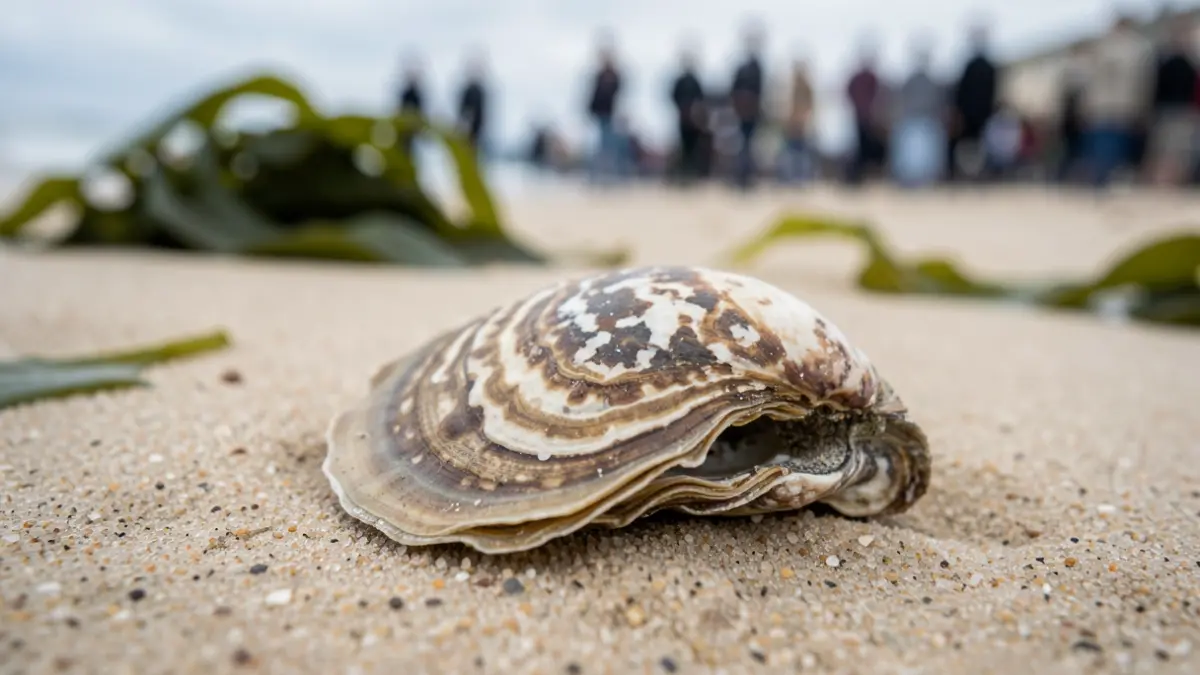
Native oyster reefs, once abundant along England's coasts, have experienced significant declines over the past two centuries. The restoration of these ecosystems is seen as vital for marine nature recovery, enhancing biodiversity, improving water quality, and fostering healthier, more resilient coastlines.
Commissioned by the Environment Agency through the Restoring Meadows, Marsh and Reef (ReMeMaRe) Initiative, the report was a collaboration between the University of Portsmouth, ZSL (Zoological Society of London), the University of Edinburgh, and Herriot-Watt University. It analysed 109 English water bodies with historical or current native oyster presence, identifying 49 sites for ecological feasibility, 39 for further assessment, and prioritising 16 for ecosystem-scale restoration.
The findings are intended to support the Government’s Environment Improvement Plan commitment to restore functional oyster reefs in five to eight suitable English water bodies. Hannah Westoby from the Environment Agency highlighted the potential of native oyster reefs to strengthen coastal natural infrastructure, support biodiversity, and deliver benefits like improved water quality and climate resilience.
Professor Joanne Preston, Professor of Marine Biology at the University of Portsmouth, stated that the report marks a turning point, providing the first national, evidence-based assessment for focusing restoration efforts. She noted that research from the University of Portsmouth has informed the government's target and the development of this report, moving towards rebuilding connected reef habitats.
Dr Philine zu Ermgassen from the University of Edinburgh, who led the report writing, emphasised the science-based approach to scaling up nature recovery in English seas. She added that restored oyster reefs have the potential to clean waters and provide fish habitats.
Alison Debney, Conservation Lead for UK Nature Recovery at ZSL, commented that the research will enable focused collective efforts on the practical delivery of native oyster restoration.
Among the 16 highest-priority water bodies identified are the Solent, Portsmouth Harbour, the Wash, the Mersey Mouth, the Blackwater, the Medway, and the lower Thames. The assessment considered environmental conditions, ecological benefits, social and economic factors, disease risks, and competing marine uses. Further work is required to identify specific locations, assess local conditions, and engage stakeholders before restoration projects can commence, with consideration for climate change and other environmental pressures.